

Printing
Digital and silkscreen printing on fine bone china, porcelain and stoneware — from single-colour designs to full four-colour process.
Types of ceramic printing
Screen printing — a traditional method using a mesh stencil and ceramic inks. Best for large runs with simple or repeat patterns; durable and often used for tile manufacturing.
Lithographic transfers (decal printing) — designs are printed on special decal paper using ceramic inks, used for onglaze, underglaze or in-glaze decoration, and can be applied manually or by machine.
Digital ceramic printing — inkjet printers with ceramic pigment inks, ideal for custom or short-run items, with high resolution and full-colour images possible.
Sublimation printing — transfers images using heat and pressure, but only works on ceramics with a polymer coating and is mainly used for decorative mugs and photo tiles.
What are ceramic transfers?
Ceramic transfers (also called ceramic decals) are specially printed images or patterns designed to be transferred onto ceramic surfaces and permanently fused through firing. They're essential for applying complex, multicoloured designs quickly and consistently — applied to tiles, plates, mugs or pottery, then fired in a kiln to bond the design to the surface.
A ceramic transfer is made up of:
- Special water-release or heat-release paper
- Ceramic pigments, sometimes including metallics like gold or silver
- A thin plastic film that holds the design together during transfer
- A water-soluble adhesive that lets the transfer slide off easily
Digital printing
Digital printing is a way of printing ceramic transfers onto waterslide paper. We print your designs onto an A3 sheet (each sheet is £12), so depending on the size of your design this can be a costly way of printing — but the upside is you can order just one sheet at a time, with a fairly quick turnaround of a couple of weeks.
The downside to digital printing is a lack of vibrancy in the colours, and some inconsistency from sheet to sheet. We typically use this method for one-off items or samples to see how a design looks — a good way to get smaller quantities printed fairly quickly.

Ordering is simple — complete the enquiry form below and we'll be in touch to help.
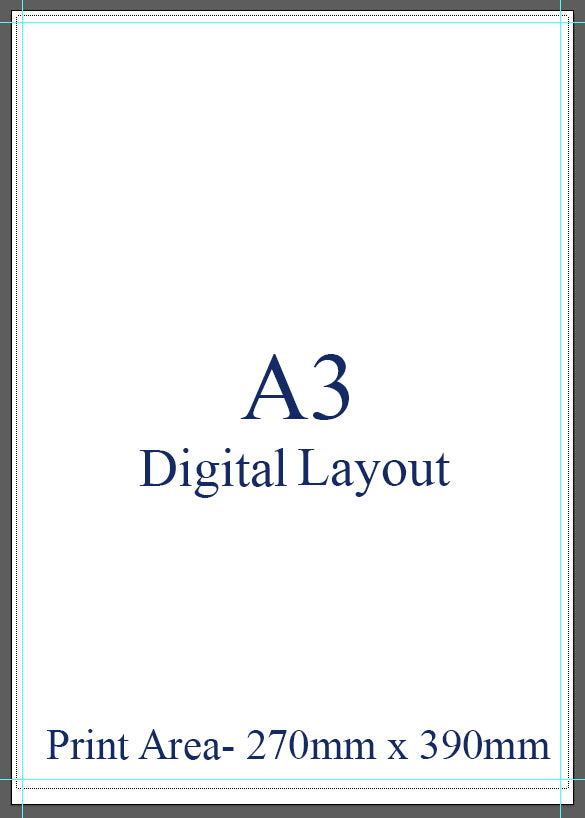
- Printed on an area of A3 (28 x 40cm)
- Delivery within 5 working days of receiving your artwork
- Minimum order is as little as one sheet, with no surcharges
- We can offer decorating and firing if required
Print charges: 1 x sheet = £12.00 exc. VAT and postage.
Artwork or design:
- We can only accept the following formats: PDF, EPS, PSD, JPEG, TIFF
- Artwork needs to be a minimum of 300dpi for the best results
- Print area is A3 (28 x 40cm) — please allow for a small border around the edge
- You can add as many transfers as required within the print area
Matching your design or artwork: white, gold, metallic and some other colours cannot be achieved with digital printing — we can offer silkscreen as an alternative if these colours are required.
Order your digital printing sheet
Upload your artwork, choose how many sheets you need, and check out securely below.
If you're decorating yourself, follow the steps below for the best results:
- Warm the ware first to 20–30°C
- Cut around your images and immerse in water for 30–40 seconds
- Slide the transfer from the backing paper
- Apply to your ware
- Ensure there are no air bubbles or creases
- Allow time for the transfer to dry before firing
Once fired, your transfer is set into the glaze and won't fade like some other printing methods — it will be dishwasher and microwave safe, providing the ware itself is.
Firing temperatures vary depending on the ware you're using: earthenware 800–820°C, china body (thick) 820–840°C, bone china (thin) 820–840°C, porcelain 840–890°C, stoneware 840–890°C. See our Firing page for the full breakdown.
We have our own team of lithographers and gilders who can decorate and fire for you — alternatively, we can provide the transfers for you to decorate yourself.
Silkscreen printing
We have years of experience in silk screen printing and can produce in single colour, multi colour, half tone and four colour process.

Order quantity: minimum order can be as small as 100 transfers, with no maximum limit.
Print charges: price varies based on size, quantity and number of colours in your artwork. Send your image to us in .jpg, .tiff, .psd, .pdf or .eps format so we can give you an accurate quote.
We can colour match to Pantone references or your own specification — white, gold and silver including metallic colours can all be achieved with silkscreen.
Your design is printed on waterslide paper and can be decorated onto glazed ceramic ware. Prints can be sold separately, or we can decorate and fire them here as a package price. We can also alter the size of your image to your requirements.
The silkscreen process, step by step
1. Design preparation — a graphic designer creates the artwork, which is separated into individual colour layers (one screen per colour). Each layer becomes a positive film used for screen exposure.
2. Screen preparation — a mesh screen is coated with photo-sensitive emulsion. The positive film for each colour is placed on the screen and exposed to light, which hardens the emulsion except where the image blocks it, leaving a stencil of the design.

3. Printing the transfer — special ceramic (oxide-based) inks are used, able to withstand kiln temperatures and fuse with the glaze. The screen is placed over water-slide decal paper and ink is pushed through with a squeegee, repeated layer by layer for each colour with careful registration.
4. Drying and finishing — sheets are air- or heat-dried, then a covercoat is applied — a protective, transparent layer that keeps the ink intact during handling and soaking.

Compilation vs spot colour layout printing
Compilation layout printing is a shared 4-colour layout (cyan, magenta, yellow and black) where your design sits alongside other customers' designs, and you share the layout and cost — paying only for the percentage of the layout your design takes up. You'd still pay for 100 transfers of each design. Because it's limited to 4 base colours, the result won't be an exact match to your original artwork.
Spot colour layout printing is the more precise option. We print your own A2 layout (minimum run of 100 sheets) using your own Pantone-matched colours, giving a near-exact match to your artwork. It's more expensive — printing alone can run to thousands of pounds — so this route is normally used by larger companies ordering thousands of pieces a month.
For both spot colour and silkscreen printing, you can pay for the transfers upfront and call off whatever quantity you need over time. Both take a minimum of 4 weeks to print.
Printing methods: what to expect
Digital Printing
Digital printing works like an office printer using ceramic toner, printed onto a single A3 sheet using four process colours (Cyan, Magenta, Yellow, Black – CMYK).
Positives:
- No minimum order quantity – ideal for samples, one-offs and small or trial runs.
- Low set-up cost, so it is usually the cheaper option below roughly 100 transfers.
- Fast turnaround – typically around 5 days to 1 week for printing.
Negatives:
- Colours are noticeably less rich and vibrant than silkscreen, and can be inconsistent from print run to print run.
- Because only four inks are used, digital struggles with rich, solid colours – reds in particular print as more of an off-red / orangey-brown rather than a true red, and dark blues or large solid blocks of colour can also lose richness.
- Colour is temperamental: a slight variation in how much of each ink is laid down can shift the overall shade and tone. The same design printed this week and again next week – or reordered a few months later – may come out a slightly different shade.
- Artwork is limited to what fits on a single A3 sheet, so larger or more complex designs sometimes need to be split or adapted.
Silkscreen Printing (CMYK Compilation)
Silkscreen printing uses UV-exposed acetate films to create a screen for each colour. Ink is poured onto the screen and a squeegee pushes it through the mesh, one colour at a time, before a clear covercoat is printed over the top to form the finished waterslide transfer. Most customers' designs are grouped together onto shared compilation sheets, which helps divide the set-up cost.
Positives:
- More vibrant, richer colour than digital printing, and noticeably more consistent from one printed sheet to the next.
- Once minimum quantities are met, the per-transfer cost is usually cheaper than digital.
- You do not have to take delivery of ware in batches of 100 – once the transfer sheets are printed, ware can be drawn down in smaller quantities over time.
Negatives:
- A minimum order of 100 transfers per design applies, and the printing cost is payable upfront regardless of how the ware is later drawn down.
- Longer lead time – typically 3–5 weeks for printing, plus decorating and firing on top.
- Still a 4-colour (CMYK) process, so exact Pantone or brand-colour matching cannot be guaranteed.
- Artwork originally created on a computer (vector files, gradients, soft colour blends) is the hardest to reproduce faithfully and can occasionally show a faint checkerboard/moiré effect where the halftone pattern clashes with the screen mesh; we angle our screens to reduce this risk but it can't be fully guaranteed.
Spot Colour Printing
Spot colour is technically the most correct way of printing: rather than building shades out of CMYK, each colour in the design is mixed and printed individually as its own bespoke ink, in its own dedicated printing pass, on a minimum run of 100 A2 sheets.
Positives:
- The only method that allows precise, repeatable matching to a specific brand colour or Pantone reference.
- Best results for designs with large solid blocks of a single strong colour.
Negatives:
- The most expensive method: each individual colour adds a significant set-up cost to the run, so a design using 7–8 colours can run into several thousand pounds for printing alone.
- Still subject to the 100-sheet minimum order.
- The longest lead time of the three methods – typically 5–6 weeks for printing.
Where budget allows, we suggest starting with a digitally printed sample so you can check colours, ware quality and the sizing/positioning of your design before committing to a larger silkscreen or spot colour run. Every piece we produce is individually hand-decorated and fired, so please also see our Decorating and Firing pages for what to realistically expect.